Glove Trade News - The Craft of Gloving
Throughout its history the Worshipful Company of Glovers has always stayed close to the business of glovemaking. Initially this related to manufacturing but this was always closely allied to design, distribution, sale and consumption.
The craft of making gloves goes back millennia and originated as a matter of protection from temperature or shocks when working. Some of the oldest known gloves still surviving were buried with King Tutankhamun in 1,341BC, the finest of which are a pair of embroidered linen gloves that it is thought he used for driving a chariot.
Tutankhamun embodied the three roles of the head of State, the Church and the Judiciary in all of which gloves have played a major role in signifying authority and status. Although diminished somewhat these ceremonial aspects carry on to this day. Over the centuries members of the Court that surrounded heads of state took to wearing gloves as a matter of fashion and display creating many fine styles. As the middle classes grew and society became wealthier fashion, or “dress”, gloves were routinely worn by a wide section of the population.
Today more gloves than ever are consumed in the U.K. but their nature has changed. The AIDS crisis and COVID-19 pandemic created markets for millions of specialist and disposable gloves in the healthcare sector. Wider concern over health and safety has made work gloves a very large sector many of which require highly technical solutions. This covers areas as diverse as constructing wind turbines to handling foodstuffs, as well as a wide variety of military gloves. In another highly technical area we now consider the gloving sector to also include some work to improve feel and dexterity with artificial limbs.
Climate change and the mass use of air-conditioned automobiles have played a part in reducing demand for traditional dress gloves, but the general leisure sector remains strong. We now consider it as including fashion gloves as well as those bought for dog walking, rambling, gardening and even some do-it-yourself tasks. Pop stars and some celebrities have kept the fashion sector alive and the whole area of sports has also become a busy one for gloves.
Since the historic fashion glove sector is now only a small part of the glove business it has become classed as a threatened craft. Since we do not want to lose the skills involved this is an area being addressed by the Livery.
With steady annual growth the British gloving industry continues to meet today's challenges to offer protection with dexterity in complex and difficult conditions. The Worshipful Company of Glovers of London is proud to be the cheerleader and champion of this industry.
- Details
The glove bindings in the library at the Bar Convent in York, in the north of England, have fascinated me since I first came across them in 2020. This collection contains fifteen examples of bindings that have been repaired with gloves. All the books are, without exception, small formats. So far, I have discovered that most of the bindings are made up of either three or four pieces of glove, possibly the same pair in each book as the colour is usually uniform across the repaired areas. Some are completely covered in the glove leather, separated along the seams but retaining its points, but most are patch repaired across the spine or corners. Although beautifully and neatly done, with the leather being taken over and onto the inner face of the boards, there is evidence that these repairs were not completed by a professional binder or even someone who has been trained in binding.
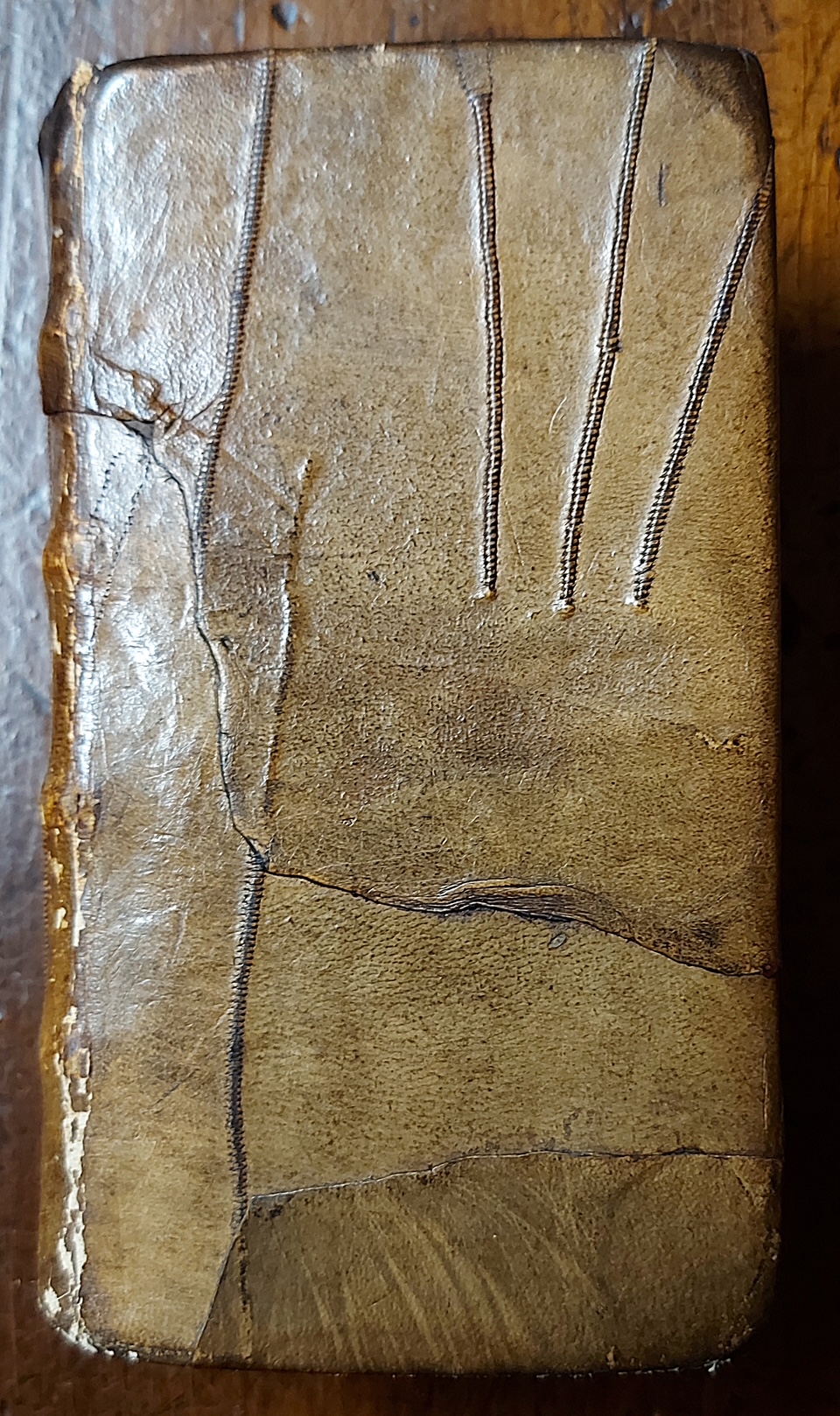
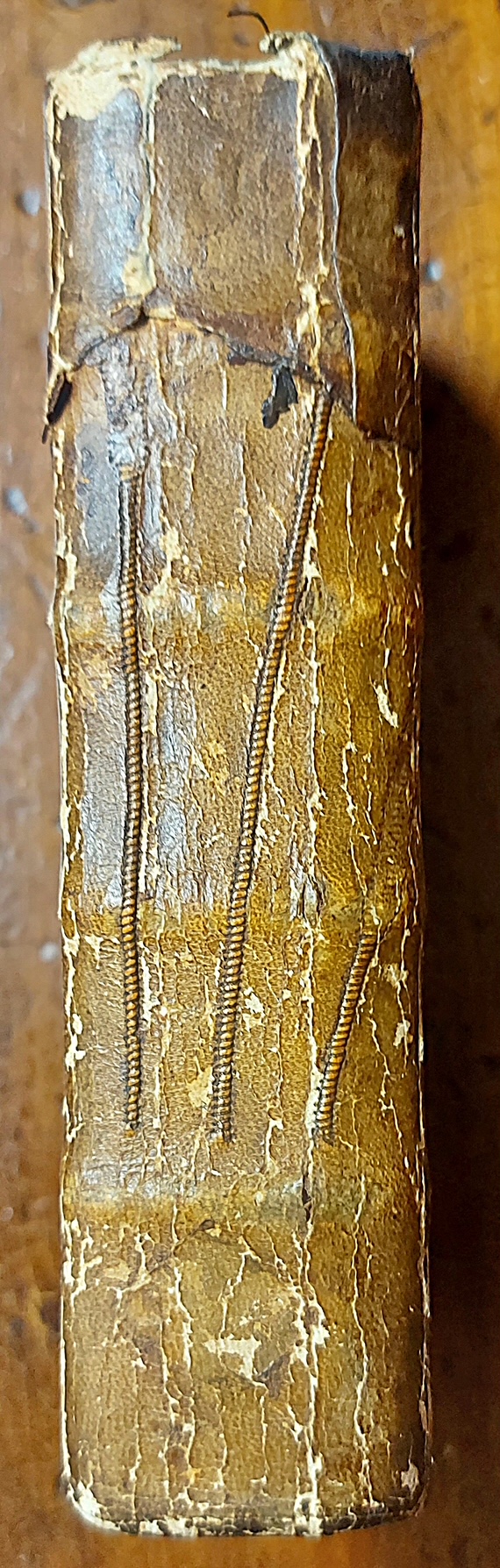

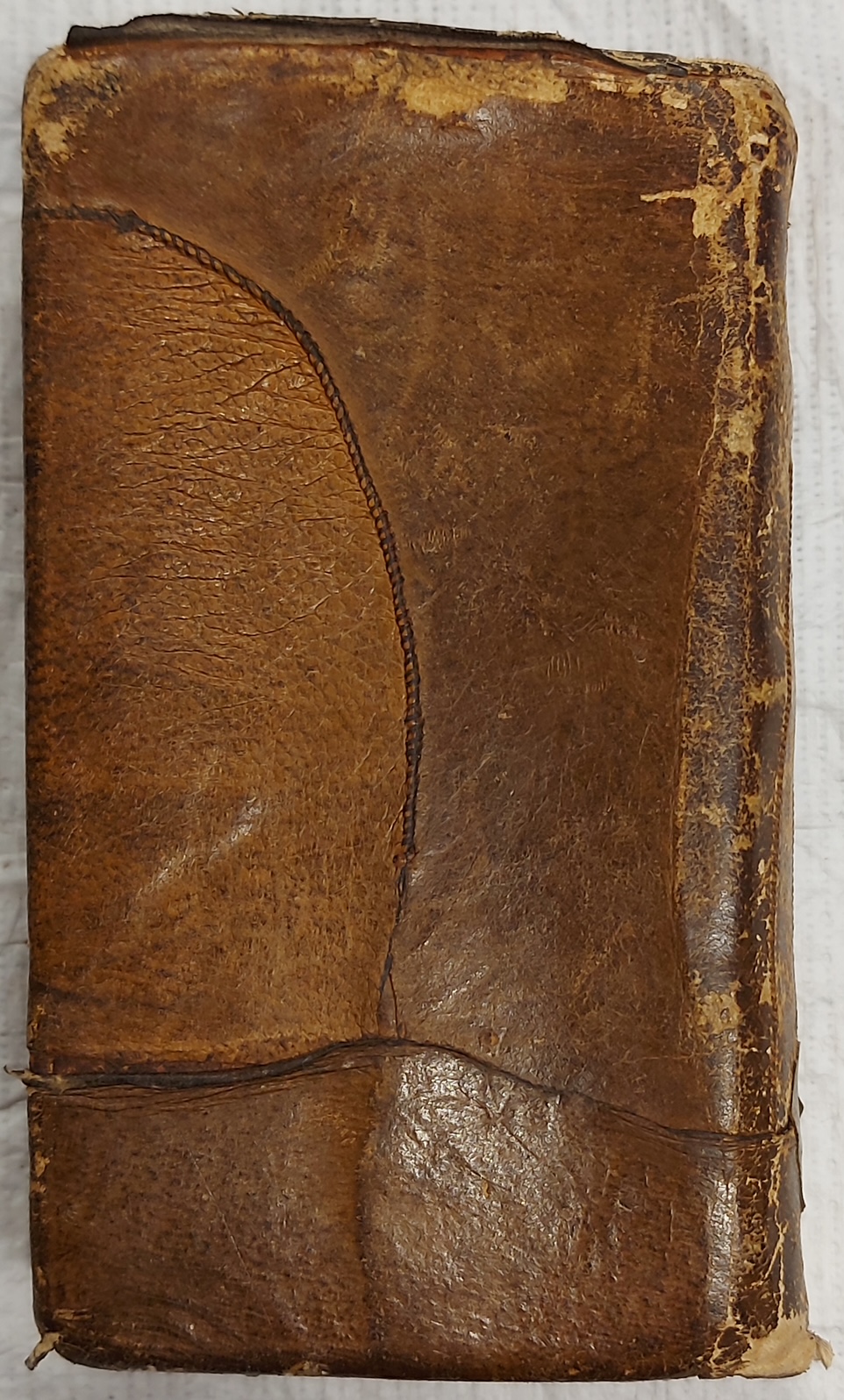

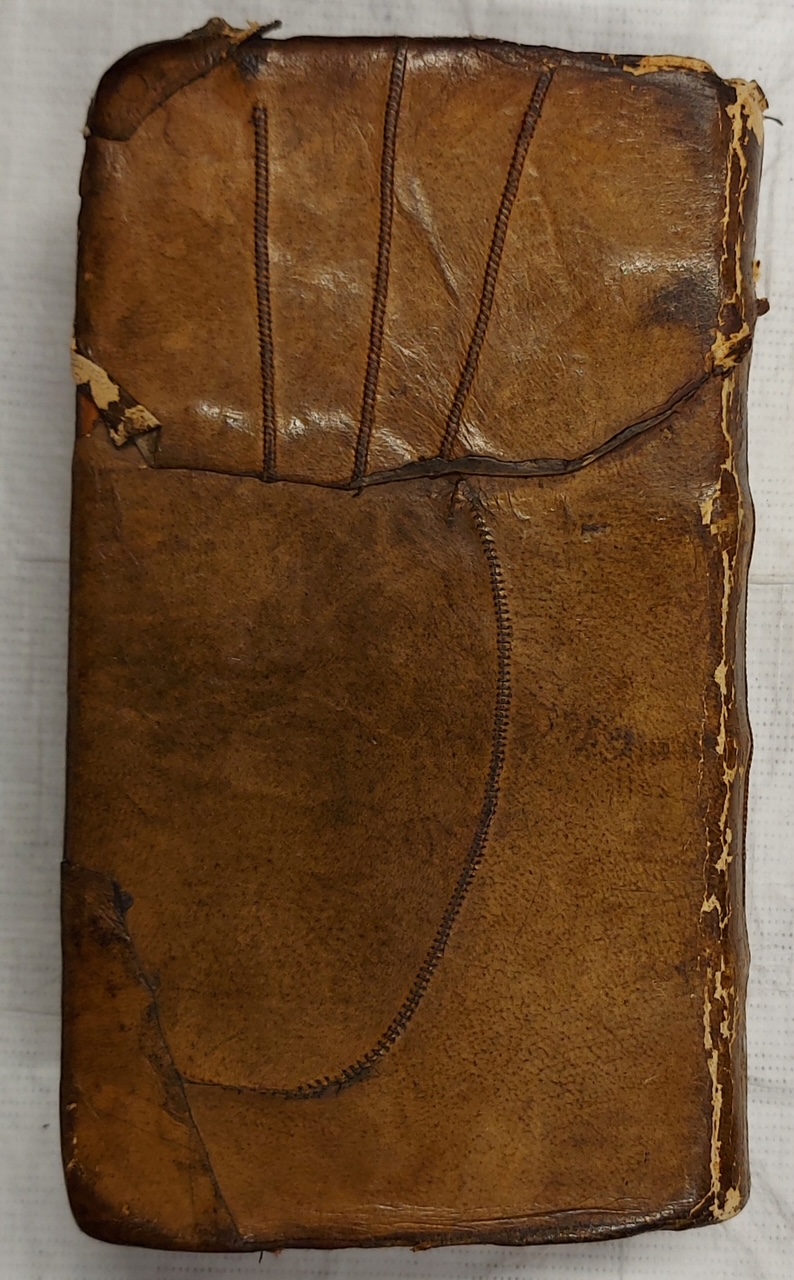
The use and reuse of waste materials in book repair is nothing new. Manuscript or printers’ waste has been used by binders in book construction and repair since the codex was developed.
- Details
As the summer scent of roses gives way this year to the colours of autumn and the rather precocious sound of conkers falling to the ground from horse chestnut trees desiccated by the summer drought, let us turn our attentions to the sometimes vexed question of smells.
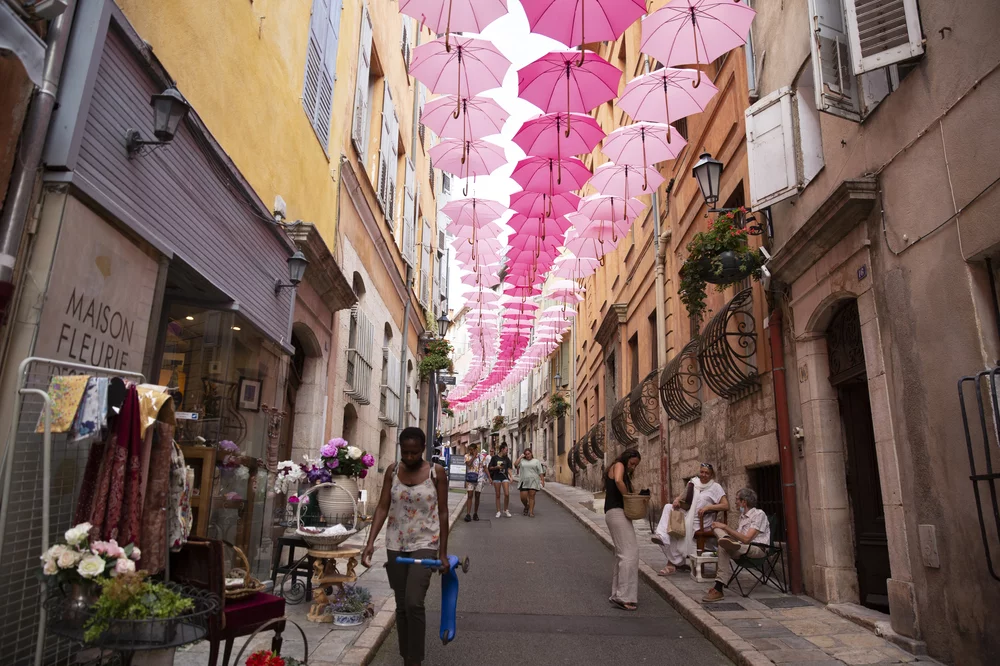
The French perfume makers of the town of Grasse have held court in their industry ever since their products won over the royal court of King Louis XV, nearly three centuries ago.
 o.
o.
Now synonymous with some of the world’s most prized scents, the medieval town wasn’t always so fragrant. In the 12th century Grasse was a hub for the tanning industry, producing coveted leather gloves that came with a not so coveted aroma.
When Jean de Galimard, the man behind what is now the town’s oldest perfumery, was tasked with making gloves for French queen, Catherine de Médici, he scented them with locally-grown flowers from his hilltop town. They were an instant hit.
https://www.beautydisrupted.com/the-story-of-scent-in-grasse/
In his day, one of the ways that the hides were stripped of flesh and hair was by the use of [sorry about this] urine and other excrement along with various tree barks. This had a two part effect: firstly, the odour would absorb into the leather, creating foul smells protruding from the leather itself; and secondly, the surrounding areas would smell bad.
Grasse originally specialised in leather tanning. "Grasse, in the Middle Ages and especially in the 16th century, is well known all over Europe for leather, not for perfume," says Laurent Pouppeville, the director of Grasse's perfume museum.
When Catherine de Medici came to France, it is also said that perhaps she began the cultivation of the various fragrant flowers in Grasse due to their perfect climate conditions with her knowledge from her home country of Italy.
"They used animal fat and they're going to put flowers in this fat and so the fat is going to take the perfume of the flowers," Pouppeville explains. "And they're going to obtain after two months a perfume pomade. And they're going to perfume the leather gloves with these perfume pomades."
The tanners switched to full-time perfume making after taxes on leather rose too high. The hillside springs they once channelled to clean the hides were instead used to distil perfume and water the fields of flowers. The French glove trade had also been put under pressure in France after opening up their market to cheap British glove imports (also leading to the Day of the Tiles, as we saw in an article we published for the Glovers last year).
https://www.npr.org/2021/09/25/1039336681/grasse-perfume-france
A fashion among women for wearing scented leather gloves developed early in the 16th century in Spain and Portugal and spread among all the nobility of Europe. In England, Queen Elizabeth started to wear them after the Earl of Oxford had brought her a pair form Italy (c. 1575) and by the time of Charles I they were so widely used that glove-makers were usually also perfumiers. In France, perfume makers were ‘Glovers and Perfumers’ until the 18th century.
Also, in a beautiful twist of fate, we now use a synthetic note in fragrance that is designed to smell like leather. We have gone from the days of using fragrance to disguise the smell of leather to creating fragrances to smell of leather.
https://www.beautifinous.co.uk/2017/07/leather-and-stench-grasse-roots-of-french-perfume.html
So, Glovers, when you are planning your summer holidays next year, and have rented your villa in Antibes or Cannes, or have your yacht berth booked in Nice, take the opportunity to take a short trip inland and visit the charming town of Grasse, where leather and perfume have worked hand in glove for centuries!
- Details
'Imagine a glove so sensitive it can detect the lightest touch, the slightest pressure, and even tiny shifts in friction. Now imagine that glove guiding a surgeon’s hand in the operating theatre. In this talk, discover how ultra-low-cost nano-sensors - costing less than a pound each - are being used to create smart surgical gloves that enhance precision and safety. Also learn about the broader healthcare advances this research may facilitate'.
This was the introduction to an exhibition and presentation which formed part of the Royal Society's Summer Science Exhibition which took place in July this year. https://royalsociety.org/science-events-and-lectures/2025/07/wed-nanotech-safer-surgery/

The presentation by Professor Manish Tiwari, of the Nanoengineered Systems Laboratory at UCL, was entitled 'Nanotechnology and Virtual Reality for Safer Surgery' and explored how 'sensing technology is transforming the future of healthcare, one touch at a time'.
In layman's terms, the concept is to enhance the touch sensitivity of a surgeon or other technician to levels far beyond what is normally and humanly possible, with huge implications for surgical and other medical procedures, as well as in much broader environments.
The full video of the presentation can be found here on You Tube Video Link
The video is around 30 minutes long (the link should take you to the start about 6 minutes in), and does talk in quite technical terms, but it is well worth watching - if you have the time!
The basis of the research is about how to improve the touch sensitivity of surgeons' hands to deliver better medical outcomes from surgery. The talk describes how they achieve this through the use of nanotechnology - printing pads onto the fingertips of surgical gloves - assisted by machine learning, AI and Virtual Reality to help with the testing and training/learning regime.
The starting point is how to identify the soft spots on a baby's head during an assisted birth, to help determine the baby's position. However, the end point is one where this enhanced sense of touch can revolutionise surgery - so this is true glove-related innovation. The touch sensitivity they discuss ranges from the impact of a sound wave, the effect of a feather landing on a finger, the touch of a smartphone, right through to general handling.
The methodology is also important. Professor Tiwari states that the use of the correct materials (self-cleaning, non-toxic, anti-bacterial, and containing no 'forever chemicals') was just as crucial. The aim was also to keep the projected cost down to less than $1 per item.
This is still, he stresses, a laboratory device at the research stage, and not a final product ready for common use, but even from this brief summary and from the more expansive presentation in the video, I am sure Glovers can see the potential for the application of this remarkable research in medicine and the wider world, bringing gloves truly into a position of importance in our modern world that we, as Glovers, know they deserve.
- Details
As Glovers will be aware, several months ago the Glove Trade Committee was revised and refreshed, to emerge from its chrysalis as the Gloves and Gloving Committee, with a remit not solely of liaising with and promoting the UK Glove Trade, but also of promoting and exploring gloves and 'driving' their use more generally.
So it seems appropriate, still in the depths of winter, that we look at Driving Gloves today.
Do you use driving gloves? For many of us that might be a ‘no’ these days. In-car technology means there are other options for keeping warm, from simple heaters to air-con units and even heated seats and steering wheels. However, if you’re like me you may find these are sometimes blunt and uncomfortable tools which are either too hot or not hot enough, or not delivering the ‘right’ sort of heat to the right parts.
And even more crucially, where is your sense of ‘style’?

The image of driving in an open top British sports car with the wind in your hair (you still had some in those days), through the Alps, or on the winding road above Monte Carlo, may seem rather Cary Grant or Grace Kelly in terms of nostalgia, but it does bring to mind the aroma and feel of soft grain leather palms, and the grace of those string-laced backs, on your hands. Close your eyes, spread out your hands and feel the comfort! (Note to Glovers: if you are currently driving, please pull over and turn off your engine before doing the ‘close your eyes’ bit).
In fact, wearing gloves when driving has been in the news recently, with safety warnings issued about the dangers of inappropriate hand attire when in control of a motor vehicle, something of which I am sure no Glover would ever be guilty!
This winter drivers were warned about the risks involved with wearing gloves while driving during cold conditions with some tempted to leave gloves and bulky accessories on as they set off on journeys in freezing temperatures.
By wearing the wrong garments they could be breaching the Highway Code and potentially leaving themselves at risk of having an accident. While special driving gloves can be worn, other winter gloves may not provide enough grip on the steering wheel. Rule 97 of the Highway Code clearly states that clothing and footwear must not prevent you from using the controls properly. Ignoring this rule can result in fines of up to £5,000, three penalty points, or worse - an accident.
These warnings from motoring experts came after instances came to light of drivers wearing ski gloves and other bulky padded gloves to keep out the cold.
So what are the options? Here is journalist Sam Higgins giving his view in 2021 on the FashionBeans website. The article focuses on men’s gloves (sorry ladies), but hopefully is of general interest.
Sam writes:
Traditionally speaking, there are two types of driving gloves: your classic all-leather designs with cut-outs on the knuckles and knitted versions with leather palms. The latter play on older handmade designs making them as cosy as a jumper made by your grandmother, but the neat leather fronting sets them apart from your regular winter hand-warmers.
These are arguably the more versatile of the two – their closeness to regular gloves allows them to slot into most casual outfits. The traditional leather options, however, evoke a sharper style. The all-leather look is a bit more serious and can easily cruise from car to office in smart looks and suiting. They’re often handcrafted, making them a more luxe option, too.
Sam highlights one of the Glovers’ friends, Dents!
Dents has been proudly hand-making gloves in England since 1777, so it’s fair to say it knows its way around a fine pair of hand warmers. The brand’s manufacturing process has barely changed since, so expect top quality construction and impressive detailing. These leather gloves were used by Daniel Craig in Spectre, which, alone, is cool enough in our eyes. Try pairing them with a tailored suit and overcoat when the mercury drops.
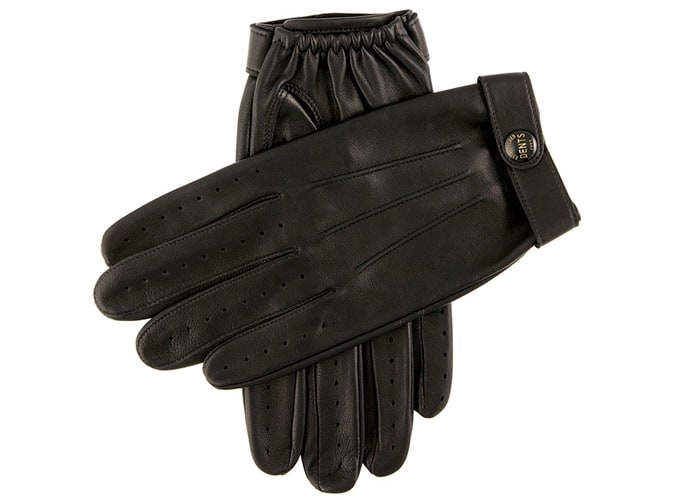
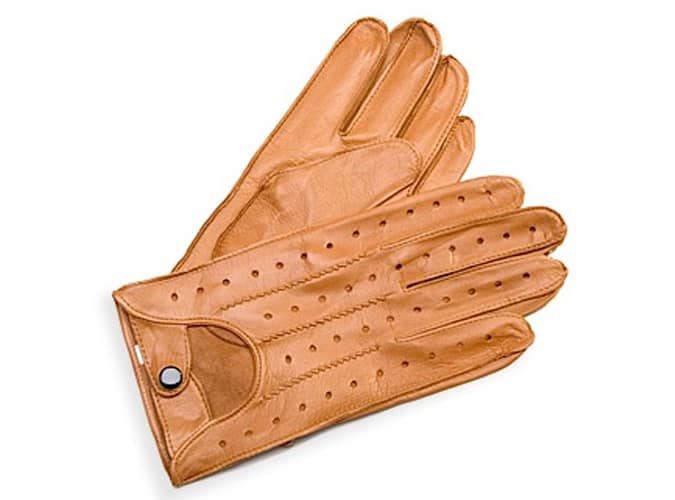
Or how about these beauties from Aspinall?
When it comes to the quality/price ratio, Aspinal is hard to beat. All of its gloves are designed in its West Sussex headquarters and then hand-made by talented artisans whose combined experience ensures each pair is made to the highest standard. The brand describes the nappa leather used on this pair as ‘buttery soft’, which is the kind of hyperbole that makes us want to invest right away. The details here – the hand-stitched perforated detailing and button snap at the wrist make their price worthwhile, and that tan leather is guaranteed to age beautifully with time.
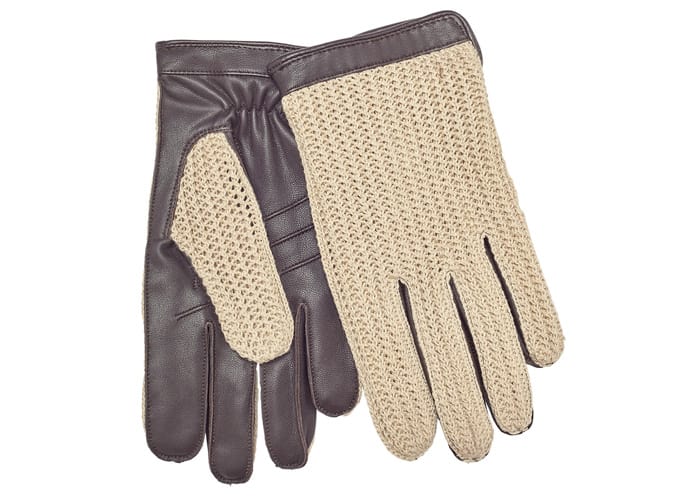
For a more High Street option, John Lewis, with that classic crocheted back!
If you’re a driving-glove sceptic, give this pair from John Lewis a spin – they’re basically driving gloves masquerading as regular winter gloves. The British icon of the high street has turned to the knitted style, with the combination of the crocheted back and leather palms giving them a more casual feel than many regular leather gloves.
So, just a few ideas for keeping your hands warm (and you safe) when out in your car this month.
Alternatively, as a Liveryman, you should have in your possession a beautiful pair of soft leather gloves with excellent dexterity already! I was admitted to the Livery last year, and my gloves have been getting good use in my car since then. Happy driving everyone!
For the full article on Best Driving Gloves For Men, please follow the link below
https://www.fashionbeans.com/article/best-driving-gloves-men/