'Imagine a glove so sensitive it can detect the lightest touch, the slightest pressure, and even tiny shifts in friction. Now imagine that glove guiding a surgeon’s hand in the operating theatre. In this talk, discover how ultra-low-cost nano-sensors - costing less than a pound each - are being used to create smart surgical gloves that enhance precision and safety. Also learn about the broader healthcare advances this research may facilitate'.
This was the introduction to an exhibition and presentation which formed part of the Royal Society's Summer Science Exhibition which took place in July this year. https://royalsociety.org/science-events-and-lectures/2025/07/wed-nanotech-safer-surgery/
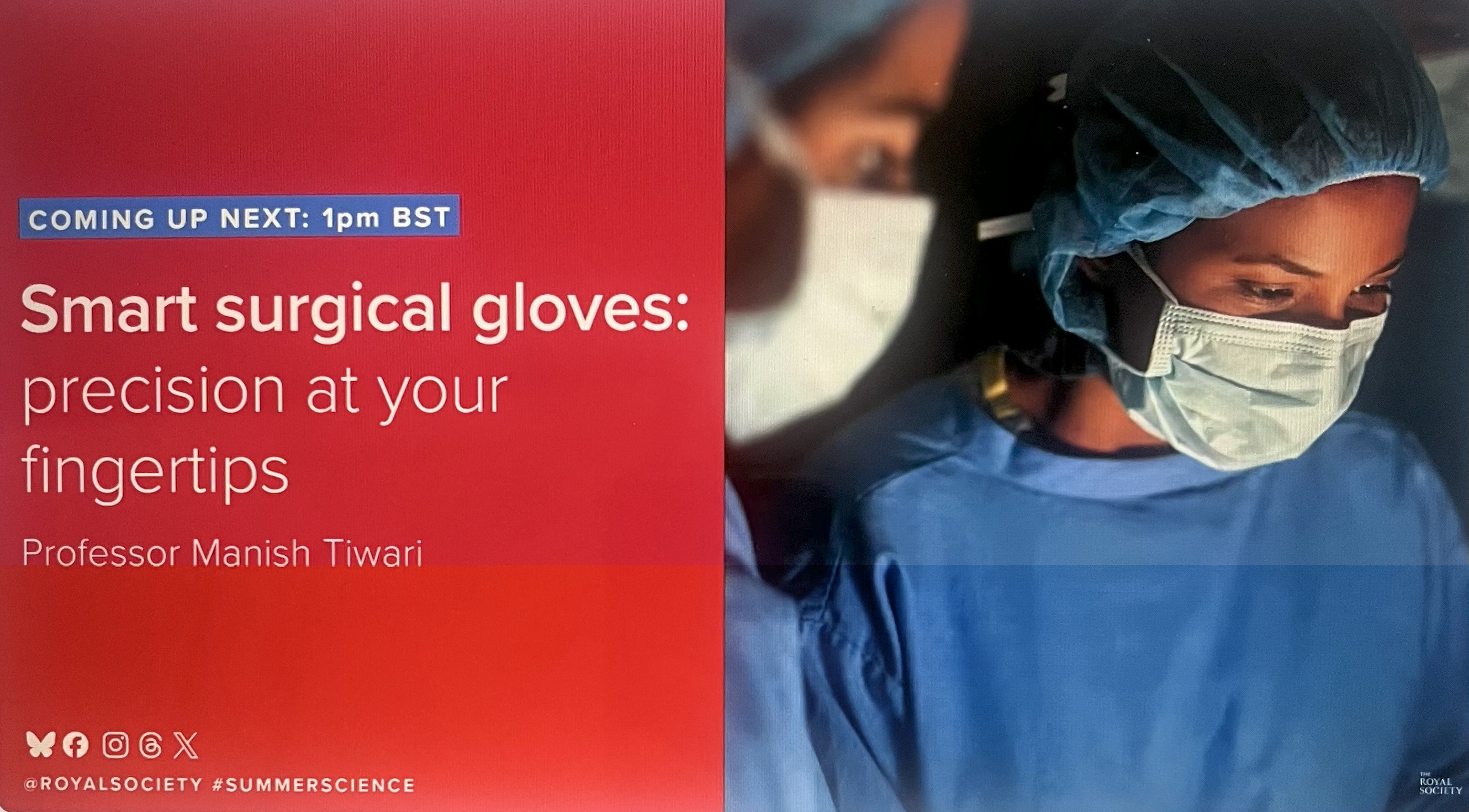
The presentation by Professor Manish Tiwari, of the Nanoengineered Systems Laboratory at UCL, was entitled 'Nanotechnology and Virtual Reality for Safer Surgery' and explored how 'sensing technology is transforming the future of healthcare, one touch at a time'.
In layman's terms, the concept is to enhance the touch sensitivity of a surgeon or other technician to levels far beyond what is normally and humanly possible, with huge implications for surgical and other medical procedures, as well as in much broader environments.
The full video of the presentation can be found here on You Tube Video Link
The video is around 30 minutes long (the link should take you to the start about 6 minutes in), and does talk in quite technical terms, but it is well worth watching - if you have the time!
The basis of the research is about how to improve the touch sensitivity of surgeons' hands to deliver better medical outcomes from surgery. The talk describes how they achieve this through the use of nanotechnology - printing pads onto the fingertips of surgical gloves - assisted by machine learning, AI and Virtual Reality to help with the testing and training/learning regime.
The starting point is how to identify the soft spots on a baby's head during an assisted birth, to help determine the baby's position. However, the end point is one where this enhanced sense of touch can revolutionise surgery - so this is true glove-related innovation. The touch sensitivity they discuss ranges from the impact of a sound wave, the effect of a feather landing on a finger, the touch of a smartphone, right through to general handling.
The methodology is also important. Professor Tiwari states that the use of the correct materials (self-cleaning, non-toxic, anti-bacterial, and containing no 'forever chemicals') was just as crucial. The aim was also to keep the projected cost down to less than $1 per item.
This is still, he stresses, a laboratory device at the research stage, and not a final product ready for common use, but even from this brief summary and from the more expansive presentation in the video, I am sure Glovers can see the potential for the application of this remarkable research in medicine and the wider world, bringing gloves truly into a position of importance in our modern world that we, as Glovers, know they deserve.