As the summer scent of roses gives way this year to the colours of autumn and the rather precocious sound of conkers falling to the ground from horse chestnut trees desiccated by the summer drought, let us turn our attentions to the sometimes vexed question of smells.
The French perfume makers of the town of Grasse have held court in their industry ever since their products won over the royal court of King Louis XV, nearly three centuries ago.
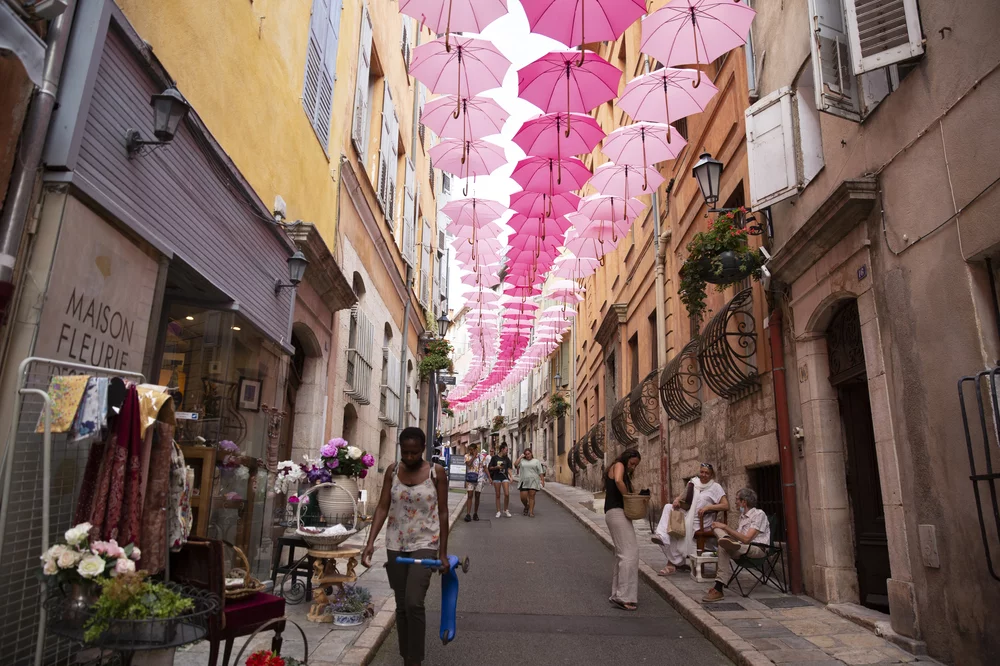 o.
o.
Now synonymous with some of the world’s most prized scents, the medieval town wasn’t always so fragrant. In the 12th century Grasse was a hub for the tanning industry, producing coveted leather gloves that came with a not so coveted aroma.
When Jean de Galimard, the man behind what is now the town’s oldest perfumery, was tasked with making gloves for French queen, Catherine de Médici, he scented them with locally-grown flowers from his hilltop town. They were an instant hit.
https://www.beautydisrupted.com/the-story-of-scent-in-grasse/
In his day, one of the ways that the hides were stripped of flesh and hair was by the use of [sorry about this] urine and other excrement along with various tree barks. This had a two part effect: firstly, the odour would absorb into the leather, creating foul smells protruding from the leather itself; and secondly, the surrounding areas would smell bad.
Grasse originally specialised in leather tanning. "Grasse, in the Middle Ages and especially in the 16th century, is well known all over Europe for leather, not for perfume," says Laurent Pouppeville, the director of Grasse's perfume museum.
When Catherine de Medici came to France, it is also said that perhaps she began the cultivation of the various fragrant flowers in Grasse due to their perfect climate conditions with her knowledge from her home country of Italy.
"They used animal fat and they're going to put flowers in this fat and so the fat is going to take the perfume of the flowers," Pouppeville explains. "And they're going to obtain after two months a perfume pomade. And they're going to perfume the leather gloves with these perfume pomades."
The tanners switched to full-time perfume making after taxes on leather rose too high. The hillside springs they once channelled to clean the hides were instead used to distil perfume and water the fields of flowers. The French glove trade had also been put under pressure in France after opening up their market to cheap British glove imports (also leading to the Day of the Tiles, as we saw in an article we published for the Glovers last year).
https://www.npr.org/2021/09/25/1039336681/grasse-perfume-france
A fashion among women for wearing scented leather gloves developed early in the 16th century in Spain and Portugal and spread among all the nobility of Europe. In England, Queen Elizabeth started to wear them after the Earl of Oxford had brought her a pair form Italy (c. 1575) and by the time of Charles I they were so widely used that glove-makers were usually also perfumiers. In France, perfume makers were ‘Glovers and Perfumers’ until the 18th century.
Also, in a beautiful twist of fate, we now use a synthetic note in fragrance that is designed to smell like leather. We have gone from the days of using fragrance to disguise the smell of leather to creating fragrances to smell of leather.
https://www.beautifinous.co.uk/2017/07/leather-and-stench-grasse-roots-of-french-perfume.html
So, Glovers, when you are planning your summer holidays next year, and have rented your villa in Antibes or Cannes, or have your yacht berth booked in Nice, take the opportunity to take a short trip inland and visit the charming town of Grasse, where leather and perfume have worked hand in glove for centuries!